


George Washington's Mount Vernon
AI Custom Tour Platform, 2025–26
George Washington's Mount Vernon welcomes visitors from across generations, nationalities, levels of historical knowledge, accessibility needs, and reasons for visiting. An emerging partnership between Mount Vernon and LSU is exploring how artificial intelligence, spatial computing, and digital-twin methods can help one of America's most significant historic sites create more responsive and individualized forms of public interpretation.
The project grew from conversations at Ford's Theatre's 2025 AI roundtable in Washington, D.C., where museum leaders, historians, designers, and technology researchers considered how cultural institutions could use artificial intelligence while preserving scholarly authority, institutional trust, and the integrity of the historical record. Those discussions led to a continuing collaboration with Mount Vernon and the development of an early-phase concept for adaptive visitor experiences.
The first phase now in progress centers on a personalized interpretive platform that can shape a visit around each person. Visitors may eventually identify their interests, available time, preferred depth of information, accessibility needs, and the people, places, or themes they most want to explore. The system would then draw from historian-approved material to create a customized route and audio experience across the estate.
A family with young children, a scholar of the founding era, and a first-time international visitor could encounter Mount Vernon through distinctly different narratives while remaining grounded in the same verified historical sources. The objective is to make interpretation more responsive without transferring authority away from Mount Vernon's historians and educators.
Artificial intelligence offers a way to adjust emphasis, sequence, vocabulary, duration, and context while maintaining a controlled body of institutional knowledge. Instead of presenting one fixed tour to every visitor, the platform can create multiple pathways through the same scholarship. Historical accuracy remains governed by the institution, while design and technology make that knowledge more accessible, relevant, and usable for a broader public.
The current work focuses on defining the visitor experience, organizing the interpretive framework, evaluating the appropriate role of AI, and establishing a technical foundation that can expand over time. LSU designers, developers, researchers, and graduate students are working with Mount Vernon to translate institutional goals and historical content into a practical, scalable platform.
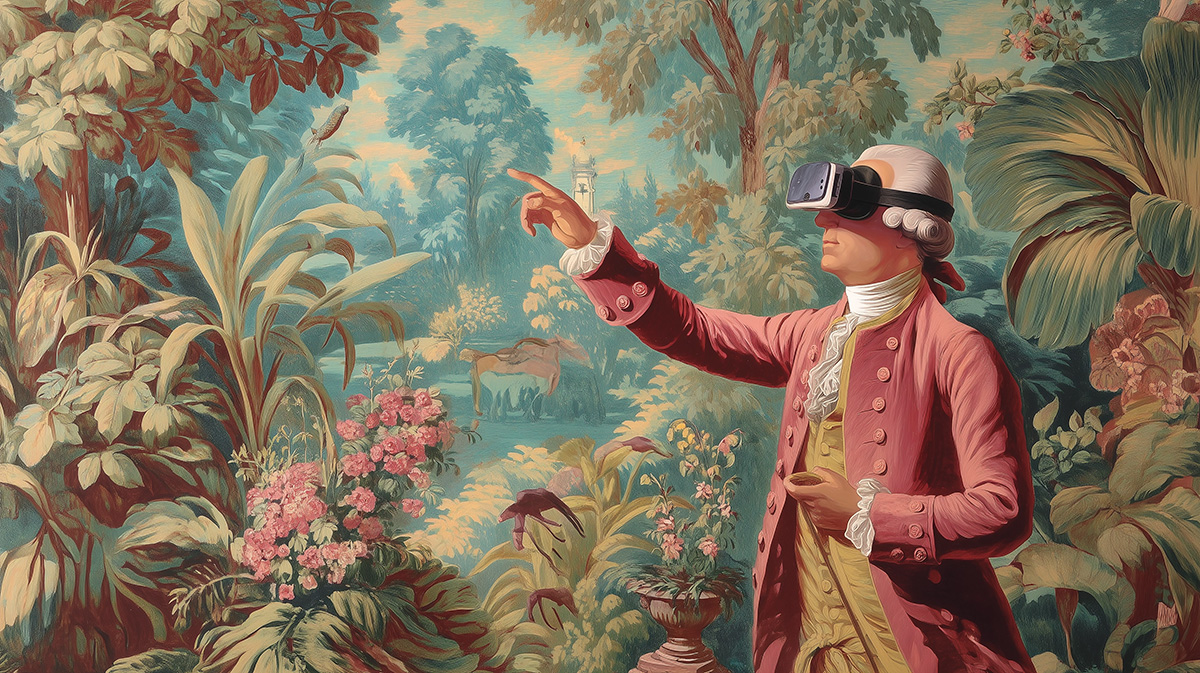
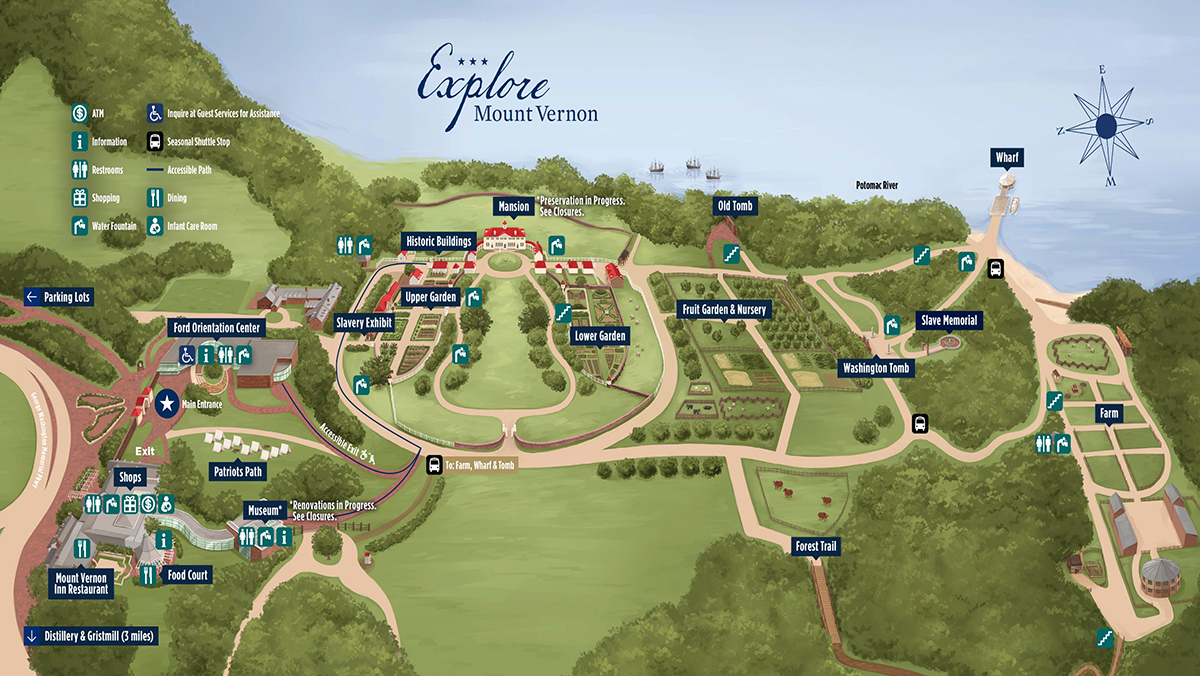
Later phases may extend the project into an interactive spatial map, augmented-reality interpretation, location-based activities, archaeological experiences, and conversational tools that allow visitors to ask questions as they move through the estate. These systems could connect buildings, landscapes, artifacts, archival records, and historical narratives within a unified digital environment.
Because the project remains in an early stage, its importance lies as much in the model being developed as in the initial platform itself. Mount Vernon provides an extraordinary setting in which preservation, education, national memory, and public access converge. The collaboration is testing how historic institutions can adopt advanced technology deliberately, beginning with institutional values and visitor needs rather than allowing the capabilities of a technology platform to define the experience.
The project proposes a broader model for museums and historic sites: verified knowledge can remain authoritative while the experience of encountering it becomes increasingly personal, dynamic, and responsive. Preservation and personalization can advance together, with technology serving as an instrument for deeper public connection to history and place.